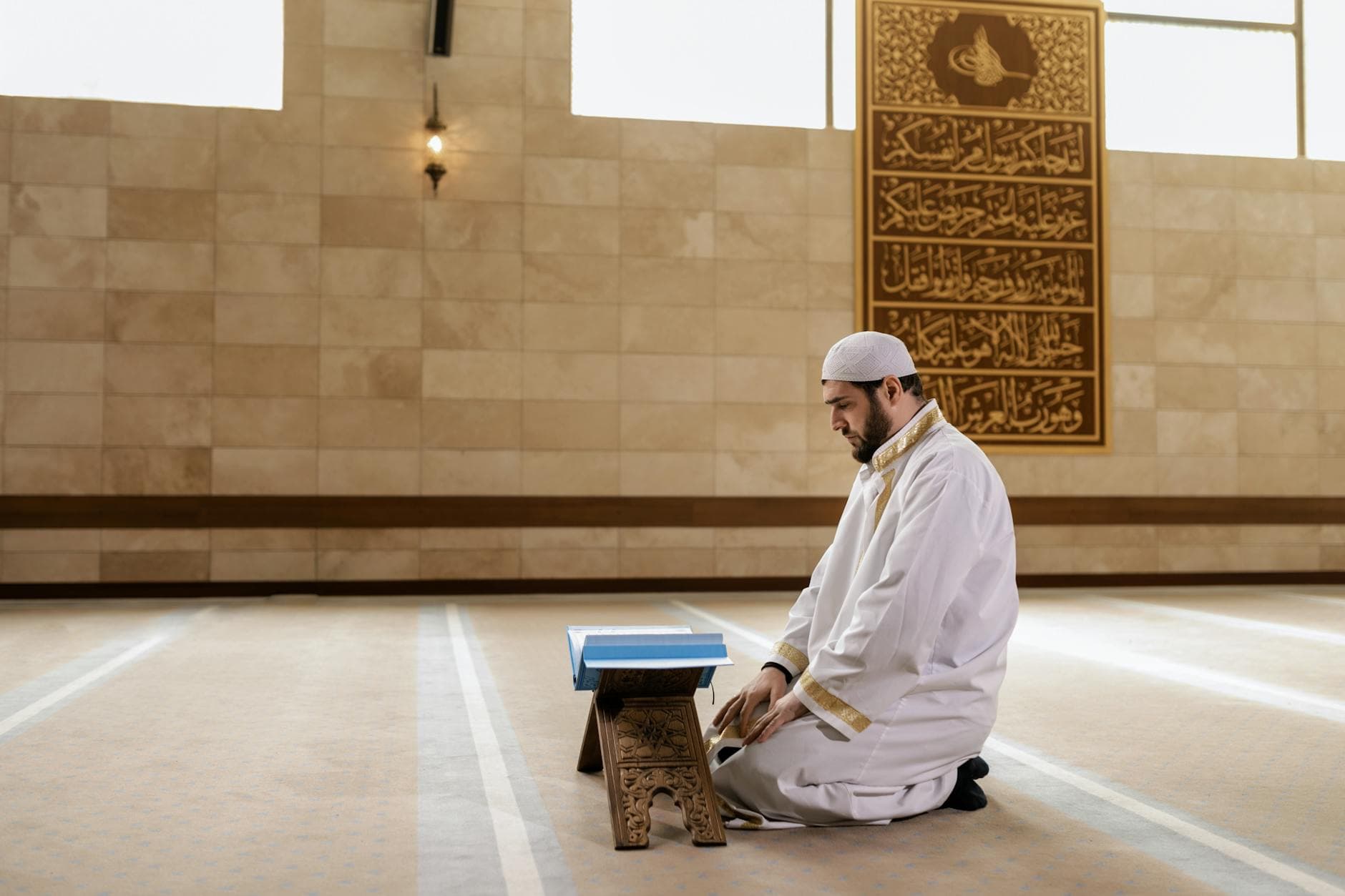
The Spiritual Oasis: Unveiling the Profound Importance of Salah in a Muslim's Life
In the vast desert of life, filled with its trials, tribulations, and endless distractions, every soul seeks an oasis – a place of peace, refreshment, and spiritual solace. For a Muslim, this oasis is Salah, the prescribed daily prayer. More than just a ritual, Salah is the direct, unwavering connection to our Creator, Allah (SWT), and the very backbone of our faith.
Salah is the second pillar of Islam, a fundamental act of worship that distinguishes a believer and nurtures the soul. It is a divine gift, a time-out from the worldly hustle, and a moment to reconnect with the divine presence that gives purpose and meaning to our existence.
What Exactly is Salah? A Brief Overview
Salah refers to the five prescribed daily prayers performed by Muslims at specific times throughout the day: Fajr (dawn), Dhuhr (noon), Asr (afternoon), Maghrib (sunset), and Isha (night). Each prayer involves a series of physical movements – standing, bowing (rukūʿ), prostrating (sujūd), and sitting – accompanied by recitations from the Quran, supplications (du'a), and glorifications of Allah.
The beauty of Salah lies not just in its movements or recitations, but in the intention (niyyah) behind it. It is a conscious act of submission, gratitude, and remembrance, performed with humility and devotion, facing the Kaaba in Makkah, Saudi Arabia.
The Quranic Imperative: Allah's Command to Establish Prayer
The Holy Quran is replete with verses emphasizing the establishment and importance of Salah. Allah (SWT) repeatedly calls upon believers to uphold this pillar, highlighting its transformative power and central role in a Muslim's life.
Allah (SWT) says in the Quran:
"Recite, [O Muhammad], what has been revealed to you of the Book and establish prayer. Indeed, prayer prohibits immorality and wrongdoing, and the remembrance of Allah is greater. And Allah knows that which you do."
(Quran 29:45)
This verse beautifully encapsulates the essence of Salah: it's not merely a set of movements but a spiritual shield that protects us from sin and wrongdoing. It reminds us that the remembrance of Allah within Salah is the greatest act, bringing us closer to Him and aligning our lives with His divine will.
In another powerful verse, Allah (SWT) states:
"Indeed, I am Allah. There is no deity except Me, so worship Me and establish prayer for My remembrance."
(Quran 20:14)
This verse clarifies the fundamental purpose of Salah: to remember Allah. It is through this constant remembrance that our hearts find solace, our minds find clarity, and our souls find their true purpose.
The Prophetic Guidance: Sunnah and the Exemplary Life of Prophet Muhammad (PBUH)
The Prophet Muhammad (PBUH) was the living embodiment of Islam, and his life perfectly demonstrated the profound importance of Salah. He taught us not just how to pray, but how to cherish prayer as a beloved act of worship. His teachings, preserved in the Hadith, further underscore Salah's pivotal role.
The Prophet (PBUH) said:
"Between a man and polytheism and disbelief is the abandonment of Salah."
(Sahih Muslim 82)
This Hadith highlights the grave consequences of neglecting Salah, underscoring its foundational status in defining a Muslim's faith.
Another Hadith emphasizes the value of performing prayers on time:
Narrated `Abdullah: I asked the Prophet (ﷺ) "Which deed is the dearest to Allah?" He replied, "To offer the prayers at their fixed times."
(Sahih al-Bukhari 527)
This shows that observing prayers punctually is among the most beloved deeds to Allah, reflecting discipline and devotion.
The Spiritual Dimensions: A Direct Link to the Divine
Salah is more than an obligation; it is a profound spiritual experience that offers immense benefits to the believer.
1. Remembrance of Allah (Dhikr)
At its core, Salah is a magnificent form of Dhikr, the remembrance of Allah. In a world full of distractions, Salah brings us back to our Creator, grounding us in His presence. This constant remembrance nurtures our spiritual growth and keeps our hearts alive with faith.
2. Inner Peace and Tranquility
Life's challenges can be overwhelming. Salah provides a sanctuary, a moment of profound peace and tranquility. When we stand before Allah, pouring out our hearts, we find solace and strength, knowing that the All-Powerful is listening.
3. Purification of the Soul
Salah acts as a spiritual cleanser, washing away our sins and purifying our souls. The Prophet (PBUH) beautifully illustrated this:
"The similitude of the five daily prayers is like a flowing river of sweet water flowing past the door of any one of you in which he bathes five times a day. What do you think, will any of its dirt remain?" The companions said, "No dirt at all would remain." The Prophet (ﷺ) said, "Indeed, the five daily prayers also remove sins just as water removes dirt."
(Sahih Muslim 667a)
This Hadith assures us that our daily prayers, with sincere repentance, are a means of constant purification.
4. Humility and Submission
The physical postures of Salah – bowing and prostrating – are acts of deep humility and submission to Allah. In these moments, we acknowledge our utter dependence on Him and His supreme majesty, fostering a sense of gratitude and selflessness.
5. A Light for the Believer
The Prophet (PBUH) said:
"Prayer is light."
(Sahih Muslim 223a)
This light illuminates our path in this world, guiding us towards righteousness, and will also be a light for us on the Day of Judgment, dispelling the darkness of despair and ignorance.
Physical and Mental Well-being: Beyond the Spiritual
While Salah's primary benefits are spiritual, its disciplined practice also contributes positively to our physical and mental health.
1. Discipline and Routine
The five daily prayers instill a strong sense of discipline and routine. Punctuality and adherence to a schedule are virtues that extend beyond prayer into all aspects of life, promoting organization and responsibility.
2. Mindfulness and Focus (Khushu)
Achieving khushu (concentration and humility) in Salah is a goal for every Muslim. This requires shutting out worldly thoughts and focusing entirely on Allah. This practice trains the mind to be present, an invaluable skill in an age of constant distraction, contributing to improved focus and mindfulness in daily tasks.
3. Stress Reduction and Emotional Resilience
Turning to Allah in Salah provides an immediate release from stress and anxiety. The act of prostration is known to calm the nervous system. Facing difficulties with prayer as a refuge builds emotional resilience, knowing that Allah is our ultimate Helper and Protector.
4. Gratitude and Positivity
Salah is a daily expression of gratitude to Allah for all His blessings. Regularly acknowledging His favors cultivates a positive mindset, reducing negativity and fostering contentment.
Building Community and Unity
Salah, especially congregational prayer (Jama'ah), plays a crucial role in fostering community bonds and unity among Muslims.
The Power of Jama'ah
When Muslims stand shoulder to shoulder in prayer, regardless of their social status, ethnicity, or wealth, it creates a powerful sense of equality and brotherhood. This shared experience strengthens communal ties and reminds us of our collective identity as an Ummah.
The Prophet (PBUH) emphasized the immense reward of congregational prayer:
"Prayer in congregation is twenty-seven times more superior to prayer offered alone."
(Sahih al-Bukhari 645; Sahih Muslim 650a)
This Hadith encourages us to pray in mosques and with others whenever possible, reaping greater rewards and strengthening our community fabric.
Overcoming Obstacles and Cultivating Khushu
Many Muslims struggle with maintaining consistency in Salah or achieving true khushu. It's a journey, and every step counts. Here are some practical tips:
- Understand What You Recite: Learning the meaning of the surahs, duas, and glorifications vastly deepens your connection and focus.
- Prepare Beforehand: Perform wudu (ablution) thoroughly, wear clean clothes, and find a quiet, clean space. Prepare your mind by letting go of worldly concerns for those few minutes.
- Pray On Time: Prioritize Salah over other commitments. Delaying prayer often leads to missing it or rushing through it without concentration.
- Vary Your Recitations: If you know multiple surahs and duas, alternate them to keep your mind engaged and prevent monotony.
- Reflect on Movements: Consciously connect the physical movements with their spiritual meaning. Prostration, for example, is the closest a servant can be to Allah.
- Seek Allah's Help: Make du'a to Allah to grant you consistency and khushu in your prayers. He is the ultimate source of strength and guidance.
Salah: Your Lifeline in This World and the Hereafter
Salah is not just a duty; it is a gift, a lifeline that sustains us in this temporary world and prepares us for the eternal Hereafter. It is a constant reminder of our purpose, our origin, and our ultimate return. It is the first thing we will be questioned about on the Day of Judgment, and its soundness will influence the judgment of all our other deeds.
Conclusion: Embrace the Oasis
In a world that constantly pulls us in different directions, Salah stands as our steadfast anchor, our spiritual oasis. It is a sanctuary where we can shed the burdens of life, find peace, seek forgiveness, and renew our covenant with Allah. Let us cherish this profound gift, strive to perfect our prayers, and allow Salah to truly illuminate our lives, bringing us closer to Allah and eternal success.
Embrace your spiritual oasis. Make Salah the priority, and watch as it transforms not only your spiritual life but every aspect of your existence.