The Power of Pure Intentions: Understanding Niyyah in Islam
In the grand tapestry of Islamic teachings, few concepts hold as much weight and transformative power as Niyyah, or sincere intention. It is the very soul of our actions, the hidden compass that guides our deeds, and the spiritual lens through which Allah (SWT) views our efforts. More than just a thought, Niyyah is a profound commitment, a purification of purpose, and the bedrock upon which our entire spiritual edifice is built.
For new Muslims, understanding Niyyah is a gateway to unlocking deeper meaning in their newfound faith. For seasoned practitioners, it serves as a constant reminder to refine their spiritual compass, ensuring every step they take is aligned with the pleasure of Allah. This article delves into the essence of Niyyah, its profound significance, and how cultivating sincere intentions can revolutionize our worship and daily lives.
The Cornerstone Principle: Actions Are By Intentions
The central role of Niyyah is perhaps best encapsulated in one of the most foundational and often-quoted Hadith of Prophet Muhammad (peace be upon him):
Umar ibn Al-Khattab reported: The Messenger of Allah, peace and blessings be upon him, said, "Actions are by intentions, and every person will have what they intended. Whoever emigrates to Allah and His Messenger, then his emigration is for Allah and His Messenger. And whoever emigrates to achieve a worldly benefit or a woman to marry, then his emigration is for what he emigrated for."
(Sahih Bukhari 1, Sahih Muslim 1907)
This Hadith is a powerful declaration, underscoring that the value and acceptance of any deed, whether mundane or magnificent, hinge entirely on the intention behind it. It's not just about the outward act, but the inward state of the heart. Two people might perform the exact same action – giving charity, praying, or helping someone – but their rewards and spiritual standing can vastly differ based on their Niyyah.
For instance, if one gives charity to show off (riya) or to gain praise from people, their reward might be limited to that worldly praise. However, if another gives the same amount of charity purely for the sake of Allah, seeking His pleasure and compassion for the needy, then their deed is magnified in the sight of Allah, regardless of whether anyone else knows about it.
Niyyah in the Glorious Quran
The principle of sincerity and pure intention is deeply embedded throughout the Quran. Allah (SWT) repeatedly emphasizes that He is aware of what is in our hearts and that deeds must be performed solely for His sake.
"And they were not commanded except to worship Allah, [being] sincerely obedient to Him, inclined to truth, and to establish prayer and to give zakah. And that is the correct religion."
(Quran 98:5)
This verse beautifully summarizes the essence of Islam: to worship Allah with pure devotion, mukhliseen lahu al-deen (being sincerely obedient to Him). Sincerity is not an option; it is the very purpose of our existence and worship. Our deeds are not mere rituals; they are expressions of our servitude and love for our Creator.
Another profound verse highlights Allah's full awareness of our inner motivations:
"Indeed, Allah knows the unseen [aspects] of the heavens and the earth. And Allah is Seeing of what you do."
(Quran 49:18)
This reminds us that while we might deceive others or even ourselves with outward appearances, Allah knows the truth of our intentions. This realization should inspire us to constantly purify our Niyyah, knowing that every secret thought and hidden motive is laid bare before Him.
Beyond Rituals: Niyyah in Worship
Niyyah elevates our acts of worship from mere physical movements to profound spiritual experiences. Without Niyyah, an act of worship is incomplete or even invalid. Let's explore how Niyyah permeates the pillars of Islam:
Salah (Prayer)
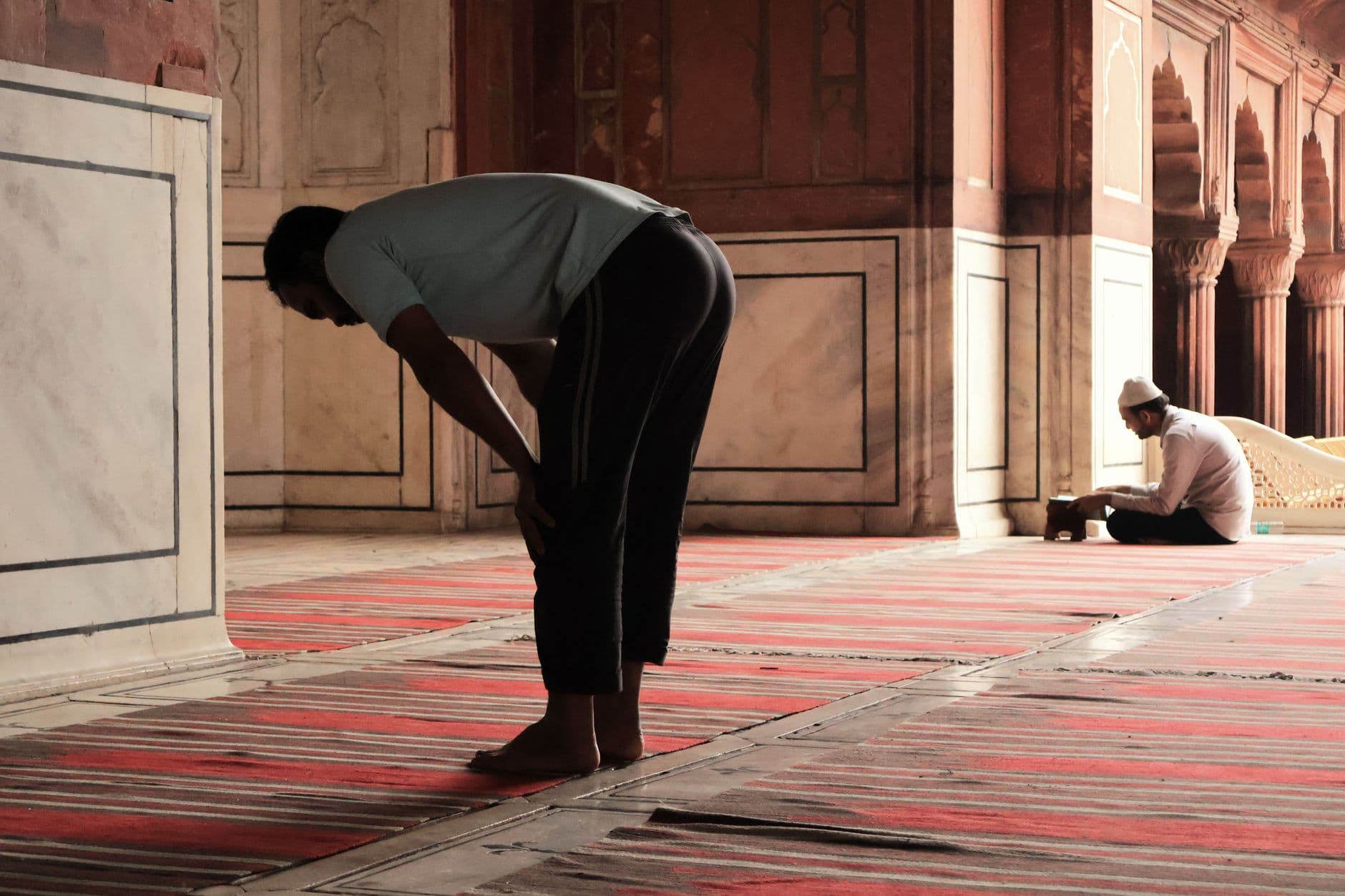
Before every prayer, a Muslim makes an intention to perform that specific prayer (e.g., 'I intend to pray the Dhuhr prayer for the sake of Allah'). This isn't just a verbal utterance; it's a mental resolve to focus solely on Allah. The Niyyah helps to shut out worldly distractions, bringing the worshipper into a state of mindfulness and submission. Without this intention, the physical movements of Salah are just exercises.
Sawm (Fasting)
Fasting is not merely abstaining from food and drink. The Prophet Muhammad (PBUH) said:
"Whoever does not give up false speech and evil deeds while fasting, Allah is not in need of his leaving his food and drink."
(Sahih Bukhari 6057)
This Hadith emphasizes that the Niyyah behind fasting must be to draw closer to Allah by purifying not just the body, but also the tongue and heart. Fasting without the intention of spiritual refinement and seeking Allah's pleasure becomes a mere diet.
Zakat (Charity)
Zakat is an obligation that purifies one's wealth. The intention here is crucial: to fulfill Allah's command, to help the needy, and to cleanse one's earnings from greed and attachment to worldly possessions. Giving Zakat with the intention of tax evasion or public recognition undermines its spiritual essence.
Hajj (Pilgrimage)
Hajj is a journey of a lifetime. The Niyyah for Hajj must be solely for Allah, seeking His forgiveness and pleasure. Those who undertake Hajj for tourism, business, or to be called 'Hajji' miss the profound spiritual transformation it offers. The exhaustion, the crowds, the rituals – all become meaningful when endured with a pure intention for Allah alone.
Niyyah in Daily Life: Transforming the Mundane into Worship
The beauty of Islam is its holistic nature, where even the most ordinary aspects of life can be transformed into acts of worship through sincere Niyyah. This concept encourages a constant state of God-consciousness, making every moment an opportunity for reward.
Work and Livelihood
Earning a halal livelihood, providing for one's family, and contributing positively to society can all be acts of worship if done with the right intention. If a Muslim goes to work with the Niyyah to fulfill his family's needs, avoid asking from others, and use his skills to benefit humanity, his entire workday becomes an act of devotion.
"Indeed, Allah loves that when one of you does a job, he does it with proficiency."
(Al-Bayhaqi)
Proficiency itself becomes an act of worship when done with the intention of pleasing Allah.
Seeking Knowledge
Acquiring knowledge, whether religious or worldly, can be immensely rewarding if the intention is pure: to understand Allah's creation, to benefit oneself and others, to spread guidance, or to strengthen one's faith. If the intention is merely for fame, debate, or material gain, its spiritual value diminishes.
Social Interactions
Greeting a fellow Muslim, visiting the sick, upholding family ties, or even simply smiling – these are all acts that carry immense reward when done with the intention of pleasing Allah, following the Sunnah, and fostering compassion.
Even Sleep and Eating
Yes, even basic human needs like sleeping and eating can be elevated to acts of worship. If one eats with the Niyyah to gain strength to perform acts of worship, or sleeps with the intention to rejuvenate the body for the next day's duties, these mundane acts are rewarded by Allah. Prophet Muhammad (PBUH) himself taught us to say 'Bismillah' (in the name of Allah) before eating, embedding intention into this simple act.
Cultivating a Sincere Niyyah
Cultivating and maintaining sincere Niyyah is an ongoing process of spiritual discipline. Here are some practical steps:
- Self-Reflection (Muhasabah): Regularly examine your intentions before, during, and after performing any action. Ask yourself: "Why am I doing this? Is it truly for Allah?" This self-accountability is crucial.
- Seek Allah's Help: Make Du'a (supplication) to Allah to purify your intentions and protect you from riya (showing off) and sum'ah (desire for fame).
- Conceal Good Deeds: While public good deeds can inspire, strive to have some deeds known only to Allah. This strengthens sincerity and guards against ostentation.
- Renew Intentions: Before beginning a task, consciously renew your Niyyah. Even if you're halfway through, take a moment to realign your heart with Allah's pleasure.
- Focus on the Hereafter: Remind yourself that worldly praise is fleeting, but Allah's acceptance and reward in the Hereafter are eternal. This helps shift focus from human approval to divine pleasure.
The Rewards of Sincere Niyyah
The benefits of a pure Niyyah are immense, both in this life and the next:
- Acceptance of Deeds: Sincere intentions are a prerequisite for deeds to be accepted by Allah (SWT).
- Barakah (Blessings): Actions performed with pure Niyyah are blessed, yielding greater impact and reward.
- Spiritual Growth: Constant self-reflection on intentions leads to a deeper connection with Allah and spiritual purification.
- Transformation of Mundane Acts: As discussed, ordinary actions become acts of worship, increasing one's scale of good deeds.
- Inner Peace: Knowing that one strives for Allah's pleasure brings contentment and peace, free from the anxieties of seeking human validation.
Conclusion
Niyyah is not merely a formality; it is the essence of our devotion, the spirit of our actions, and the compass of our spiritual journey. It reminds us that Islam is not just about outward conformity but about inner conviction and heartfelt submission. By consciously purifying our intentions, we transform every facet of our lives – from the grandest acts of worship to the simplest daily routines – into profound expressions of love and obedience to Allah (SWT).
Let us strive to cultivate a heart ever-attuned to Allah, ensuring that our Niyyah remains pure, seeking nothing but His divine pleasure in every breath we take and every step we make. Indeed, it is through the power of pure intentions that we unlock the true beauty and immense rewards of our faith.