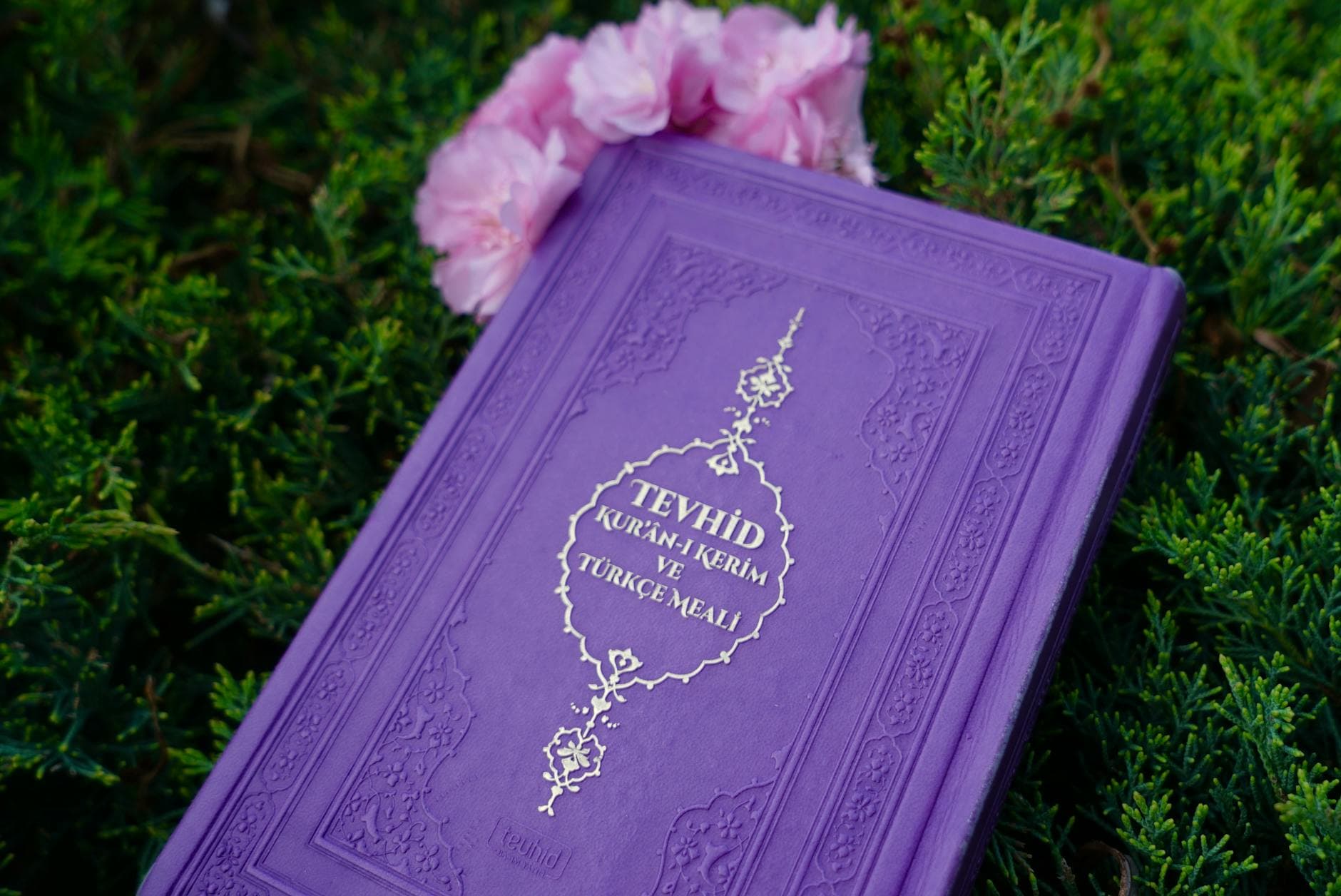
Tawhid: The Oneness of Allah and Its Profound Impact on a Muslim's Life
Welcome, dear brothers and sisters in Islam, and seekers of truth, to a journey into the very heart of our faith: Tawhid. In a world brimming with diverse beliefs and complex philosophies, Islam offers a clear, unwavering message – the absolute Oneness of Allah (SWT). This fundamental principle, known as Tawhid, is not merely a theological concept; it is the bedrock upon which the entire Islamic lifestyle is built, shaping our worship, our character, and our perspective on life itself. Understanding and internalizing Tawhid is essential for every Muslim, providing a source of immense peace, strength, and clarity.
From the moment we utter the Shahada, 'La ilaha illallah' (There is no god but Allah), we affirm this profound truth. This declaration is a covenant, a promise, and a guiding light that illuminates our path. In this comprehensive guide, we will delve deep into what Tawhid truly means, explore its various facets, examine its profound roots in the Quran and Sunnah, and uncover how it practically transforms a Muslim's daily life, offering guidance, solace, and purpose.
What is Tawhid?
Tawhid (توحيد) is an Arabic term meaning 'unification' or 'asserting oneness.' In Islamic theology, it refers to the absolute belief in the indivisible Oneness of God (Allah), His sole proprietorship over creation, His unique attributes, and His exclusive right to be worshipped. It is the antithesis of shirk (polytheism or idolatry), which is associating partners with Allah in any way. Tawhid demands that we acknowledge Allah as the one and only Creator, Sustainer, and Lord of the universe, and that He alone deserves our worship and devotion.
Islamic scholars traditionally categorize Tawhid into three main aspects to help us understand its comprehensive nature:
1. Tawhid ar-Rububiyyah (Oneness of Lordship)
This aspect of Tawhid acknowledges Allah as the sole Creator, Sustainer, Provider, and Controller of all existence. He alone gives life and causes death, sends rain, causes plants to grow, and manages all affairs of the universe. No one shares in His dominion or His power over creation.
Allah (SWT) says in the Quran:
"Indeed, your Lord is Allah, who created the heavens and the earth in six days and then established Himself above the Throne. He overwhelms the night with the day, [which] pursues it swiftly; and [He created] the sun, the moon, and the stars, subjected by His command. Unquestionably, His is the creation and the command. Blessed is Allah, Lord of the worlds." (Quran 7:54)
2. Tawhid al-Uluhiyyah (Oneness of Worship)
This is perhaps the most crucial aspect of Tawhid, emphasizing that Allah alone is worthy of all acts of worship. This includes prayer (Salah), fasting (Sawm), charity (Zakat), pilgrimage (Hajj), supplication (Du'a), seeking refuge, relying on Him, making vows, and offering sacrifices. No creation, no matter how revered, should be worshipped or invoked alongside Allah.
This is beautifully encapsulated in the opening chapter of the Quran:
"It is You we worship and You we ask for help." (Quran 1:5)
And further reinforced:
"And your Lord has decreed that you not worship except Him." (Quran 17:23)
3. Tawhid al-Asma was-Sifat (Oneness of Names and Attributes)
This aspect affirms that Allah is unique in His Names and Attributes, as mentioned in the Quran and authentic Sunnah, without distorting their meanings, denying them, likening them to creation, or questioning their modality. We affirm what Allah has affirmed for Himself and what His Messenger (peace be upon him) has affirmed for Him, without any human interpretation or anthropomorphism.
Allah (SWT) declares:
"There is nothing like unto Him, and He is the Hearing, the Seeing." (Quran 42:11)
And He has the most beautiful names:
"And to Allah belong the best names, so invoke Him by them. And leave [the company of] those who practice deviation concerning His names. They will be recompensed for what they have been doing." (Quran 7:180)
The Quranic Foundation of Tawhid
The message of Tawhid resonates throughout the entire Quran, forming its central theme. Every Prophet, from Adam to Muhammad (peace be upon them all), was sent with the call to Tawhid. The Quran repeatedly invites humanity to contemplate the signs of Allah in the universe, all pointing towards His Oneness and omnipotence.
Perhaps the most concise and profound declaration of Tawhid is Surah Al-Ikhlas, often called the 'Chapter of Sincerity' or 'Purity':
"Say, 'He is Allah, [who is] One, Allah, the Eternal Refuge. He neither begets nor is born, Nor is there to Him any equivalent.'" (Quran 112:1-4)
This Surah perfectly encapsulates the absolute transcendence and uniqueness of Allah, negating any possibility of partnership or similarity. It is a powerful antidote to any form of polytheism or anthropomorphism.
Tawhid in the Sunnah of Prophet Muhammad (PBUH)
The life and teachings of Prophet Muhammad (peace be upon him) are a practical embodiment of Tawhid. He tirelessly called people to the worship of the One God and warned against the dangers of shirk.
Consider the famous Hadith in which the Prophet (peace be upon him) sent Mu'adh ibn Jabal to Yemen:
"When you go to the people of the Book, call them to testify that 'La ilaha illallah' (There is no god but Allah) and that Muhammad is Allah's Messenger." (Sahih Bukhari, Hadith 7372; Sahih Muslim, Hadith 19)
This Hadith clearly shows that the primary message of Islam, and the first thing to call people to, is Tawhid. The Prophet (PBUH) also taught us the importance of relying solely on Allah, seeking His help, and having firm belief in His decree.
Another example is the Prophet's regular supplication:
"O Allah, to You belongs all praise, You are the Light of the heavens and the earth and all that is in them; to You belongs all praise, You are the Sustainer of the heavens and the earth and all that is in them; to You belongs all praise, You are the Lord of the heavens and the earth and all that is in them; and You are the Truth, and Your promise is the truth, and meeting You is the truth, and Paradise is the truth, and the Fire is the truth, and the Prophets are the truth, and Muhammad is the truth, and the Hour is the truth. O Allah, to You I have submitted, and in You I have believed, and upon You I have relied, and to You I have turned, and for You I have disputed, and to You I have referred for judgment. So forgive me for what I have sent forth and what I have held back, and what I have concealed and what I have declared, You are my God; there is no god but You." (Sahih Bukhari, Hadith 6317; Sahih Muslim, Hadith 769)
This beautiful dua is a profound affirmation of Tawhid in all its categories.
The Practical Impact of Tawhid in Daily Life
Embracing Tawhid is not just about intellectual assent; it’s a transformative journey that profoundly impacts every aspect of a Muslim's life. When Tawhid truly settles in the heart, it brings about immense practical benefits:
1. Fosters Inner Peace and Contentment
Knowing that there is only One God who controls everything brings immense peace. A person with firm Tawhid understands that whatever good befalls them is from Allah, and whatever difficulty arises is by His permission, carrying wisdom. This frees the heart from anxiety about worldly losses and provides contentment in Allah's decree.
2. Eliminates Fear and Anxiety (Except Fear of Allah)
When one truly believes that only Allah can benefit or harm, the fear of creation diminishes. A believer fears Allah alone and seeks His protection, rather than being enslaved by the fear of people, poverty, or future uncertainties. This instills courage and reliance on the Ultimate Power.
"Is not Allah sufficient for His Servant? And [yet], they threaten you with those [idols] other than Him. And whoever Allah leaves astray – there is no guide for him." (Quran 39:36)
3. Promotes Gratitude and Humility
Tawhid cultivates a deep sense of gratitude. Every blessing, from a breath of air to abundant sustenance, is recognized as a gift from the One Creator. This understanding leads to humility, preventing arrogance and reminding us that all strength and success come from Allah.
4. Encourages Submission and Reliance on Allah
The belief in Allah's absolute Lordship (Rububiyyah) and His sole right to worship (Uluhiyyah) leads to complete submission (Islam) to His will. A Muslim relies entirely on Allah (Tawakkul) in all affairs, knowing that His plan is perfect and His help is always near.
5. Inspires Justice and Ethical Conduct
Tawhid instills a strong sense of accountability. If Allah is the sole Lawgiver and the ultimate Judge, then every action, whether public or private, is observed by Him. This belief fosters honesty, justice, fairness, and ethical behavior, as one strives to please Allah and fears His displeasure.
6. Unites the Muslim Ummah
Tawhid serves as a powerful unifying force for the entire Muslim community. Regardless of race, nationality, or social status, all Muslims are united by their common belief in the One God and their shared purpose of worshipping Him. This brotherhood transcends all worldly divisions.
Guarding Against Shirk (Polytheism)
Just as Tawhid is the greatest virtue, shirk is the gravest sin in Islam. It is the antithesis of Tawhid and involves associating partners with Allah in His Lordship, His attributes, or His worship. Shirk can manifest in obvious forms like worshipping idols, or subtle forms like showing off in worship, believing in superstitions, or relying on others more than Allah. The Quran warns repeatedly about the severe consequences of shirk, as it is the only sin Allah says He will not forgive if one dies upon it without repentance.
"Indeed, Allah does not forgive association with Him, but He forgives what is less than that for whom He wills. And he who associates others with Allah has certainly fabricated a tremendous sin." (Quran 4:48)
Therefore, a continuous effort to purify our Tawhid and guard against all forms of shirk, both major and minor, is paramount in a Muslim's life.
Conclusion
Tawhid is the soul of Islam, the essence of its message, and the key to a fulfilling life. It is a profound declaration that liberates humanity from servitude to creation and elevates them to the worship of the One true Creator. By understanding, believing in, and living by Tawhid, we align ourselves with the ultimate truth, find true freedom, and achieve a deep sense of purpose and tranquility.
May Allah (SWT) strengthen our Tawhid, purify our intentions, and keep us steadfast on the path of His Oneness until we return to Him. Ameen.
Frequently Asked Questions About Tawhid
What is the most important concept in Islam?
The most important concept in Islam is Tawhid, which is the absolute belief in the indivisible Oneness of Allah (God) and His exclusive right to be worshipped.
What are the three categories of Tawhid?
The three main categories of Tawhid are Tawhid ar-Rububiyyah (Oneness of Lordship), Tawhid al-Uluhiyyah (Oneness of Worship), and Tawhid al-Asma was-Sifat (Oneness of Names and Attributes).
What is the opposite of Tawhid?
The opposite of Tawhid is Shirk, which means associating partners with Allah (God) in His Lordship, attributes, or worship. It is considered the gravest sin in Islam.
How does Tawhid impact a Muslim's daily life?
Tawhid brings inner peace, eliminates fear (except of Allah), fosters gratitude, encourages reliance on Allah, inspires ethical conduct, and unites the Muslim community. It provides purpose and strength in all aspects of life.
Can Tawhid be strengthened?
Yes, Tawhid can be strengthened through regular study of the Quran and Sunnah, contemplation of Allah's creation, consistent acts of worship, sincere supplication, and continuously guarding against any form of shirk in one's thoughts and actions.