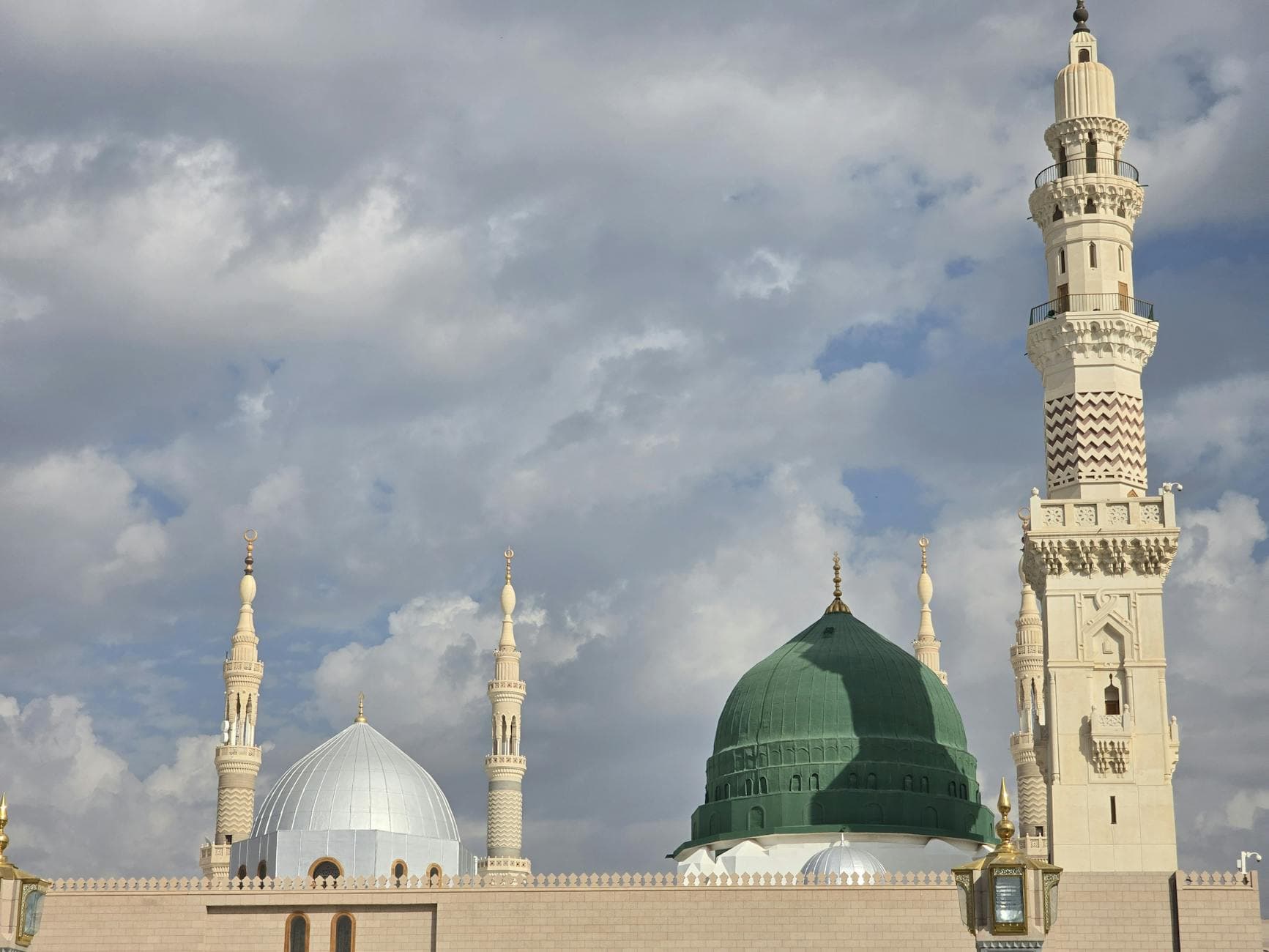
Tawhid: The Oneness of Allah and Guarding Against Shirk
In the heart of Islamic faith lies Tawhid, the absolute and uncompromising belief in the Oneness of Allah. It is the very essence of our existence, the purpose of creation, and the cornerstone upon which a Muslim’s entire life is built. To understand Islam truly, one must grasp Tawhid in its profound depth and simultaneously recognize its antithesis, Shirk, which is associating partners with Allah or giving any of His exclusive rights to creation. Understanding Tawhid and guarding against Shirk is not merely a theological exercise; it is a spiritual imperative that shapes our worldview, our actions, and ultimately, our destiny.
In a world filled with distractions, fleeting desires, and subtle influences, the purity of Tawhid can sometimes be diluted, leading believers, knowingly or unknowingly, towards practices that touch upon Shirk. This blog post aims to illuminate the beauty of Tawhid, clarify the different forms of Shirk, and provide practical guidance on how to strengthen our connection with Allah and protect our faith from any blemish.
The Immutable Foundation: Understanding Tawhid
Tawhid is more than just saying 'there is no god but Allah.' It is a comprehensive belief that Allah is one in His Lordship (Rububiyah), one in His worship (Uluhiyah), and one in His Names and Attributes (Asma wa Sifat).
Tawhid al-Rububiyah (Oneness of Lordship)
This aspect affirms that Allah alone is the Creator, Sustainer, Provider, Giver of Life, and Causer of Death. He alone controls the universe, its affairs, and everything within it. No one shares in His dominion or His power.
Tawhid al-Uluhiyah (Oneness of Worship)
This is the most crucial aspect for our daily lives. It means directing all acts of worship—such as prayer (Salah), supplication (Du'a), seeking help (Istighathah), seeking refuge (Istia'dhah), sacrifice (Dhabh), vows (Nadhr), love (Mahabbah), fear (Khawf), hope (Raja'), and reliance (Tawakkul)—exclusively to Allah, and to no one else. This is the very message of all prophets.
Tawhid al-Asma wa Sifat (Oneness of Names and Attributes)
This entails affirming all the Names and Attributes of Allah that He has affirmed for Himself in the Quran and that His Messenger (peace be upon him) has affirmed for Him in authentic Hadith, without distortion (tahreef), denial (ta'teel), asking 'how' (takyeef), or likeness (tamtheel). Allah says in the Quran:
"Say, 'He is Allah, [who is] One, Allah, the Eternal Refuge. He has not begotten, nor has He been begotten, And there is none comparable to Him.'" (Quran 112:1-4)
The importance of Tawhid is underscored by the fact that it is the first pillar of Islam, encapsulated in the Shahada: La ilaha illa Allah. It is the ultimate purpose of our creation, as Allah states:
"And I did not create the jinn and mankind except to worship Me." (Quran 51:56)
The Gravity of Shirk: The Unforgivable Sin
Shirk is the opposite of Tawhid. It is the gravest sin in Islam, for it denies the very purpose of creation and insults the majesty and absolute Oneness of Allah. Shirk comes in two main categories: Major Shirk (Shirk al-Akbar) and Minor Shirk (Shirk al-Asghar).
Major Shirk (Shirk al-Akbar)
Major Shirk involves associating partners with Allah in His Lordship, His Worship, or His Names and Attributes. It is a complete departure from Islam and renders all good deeds null and void. If one dies upon major shirk without repenting, Allah will not forgive it.
"Indeed, Allah does not forgive association with Him, but He forgives what is less than that for whom He wills. And he who associates others with Allah has certainly fabricated a tremendous sin." (Quran 4:48)
Examples of Major Shirk include:
- Associating partners in worship: Directing any act of worship (like prayer, supplication, sacrifice, prostration) to anyone other than Allah, such as idols, prophets, saints, angels, or graves.
- Believing in others having Allah's unique attributes: Believing that someone other than Allah has the power to create, sustain, or know the unseen in a manner exclusive to Allah.
- Seeking help from the dead or absent: Invoking or asking for help from deceased individuals, even righteous ones, or from absent beings, believing they can hear and respond in ways only Allah can.
- Believing in diviners or fortune-tellers: Accepting the claims of those who profess to know the unseen, which is solely Allah's domain, or believing in the power of magic to harm or benefit independently of Allah's will.
It is crucial to understand that sincere repentance (Tawbah) from major shirk before death can be accepted by Allah. However, dying upon it without repentance is the only sin Allah has declared He will not forgive.
Minor Shirk (Shirk al-Asghar)
Minor Shirk does not take a person out of the fold of Islam but is a severe sin that diminishes the perfection of Tawhid. It acts as a pathway that can lead to major shirk if not guarded against. The Prophet Muhammad (peace be upon him) was very concerned about minor shirk for his community.
Mahmoud bin Labid reported: The Messenger of Allah (peace be upon him) said, "Verily, the greatest fear I have for you is minor polytheism." They said, "O Messenger of Allah, what is minor polytheism?" The Prophet said, "It is showing off (riya)." (Sunan Ibn Majah)
Examples of Minor Shirk:
- Riya' (Showing off): Performing acts of worship or good deeds to gain praise, admiration, or recognition from people, rather than solely for Allah's pleasure. For instance, prolonging Salah when others are watching, or giving charity to be seen as generous.
- Swearing by other than Allah: Taking an oath by the Kaaba, one's parents, a prophet, or anything other than Allah. The Prophet (peace be upon him) said:
"Whoever swears by other than Allah has committed kufr or shirk." (Sunan Abi Dawud, authenticated by Al-Albani)
- Saying "If Allah wills and you will": Attributing equal power or will to a created being alongside Allah. The correct way is to say "If Allah wills, then you will," or simply "If Allah wills." The Prophet (peace be upon him) said:
"Do not say, 'What Allah wills and so-and-so wills.' Rather, say, 'What Allah wills, then so-and-so wills.'" (Sunan Abi Dawud, authenticated by Al-Albani)
- Superstition and Omens: Believing that certain objects, numbers, events, or actions bring good or bad luck, independent of Allah's decree (e.g., black cats, breaking a mirror, specific days). While not always major shirk, this can be a form of minor shirk if one believes these things have inherent power without Allah's will.
Real-World Manifestations of Shirk Today
Shirk isn't always about bowing to idols. In our modern world, it often takes subtle and insidious forms that can creep into our hearts and practices:
- Excessive reliance on worldly means: While we are encouraged to strive and use means, placing absolute trust and reliance on a job, a person, money, or anything created, forgetting that these are mere tools provided by Allah, can be a subtle form of Shirk.
- Charms and Amulets: Wearing or hanging items (like 'evil eye' charms, certain verses, or objects) believing they intrinsically protect from harm or bring benefit, rather than believing protection comes solely from Allah, is a clear form of minor shirk, and can become major if one believes the object itself has independent power.
- Seeking blessings from graves or individuals: Visiting graves with the intention of supplicating through the deceased, or believing that a particular individual (living or deceased) can grant wishes, intercede unconditionally, or bring blessings independent of Allah. While visiting graves for remembrance and making dua for the deceased is permissible, asking the deceased for something is Shirk.
- Seeking reputation in good deeds: Performing acts of worship, charity, or dawah primarily to be seen as pious, knowledgeable, or generous by others, is Riya' (minor shirk). The purity of intention is paramount.
- Blindly following cultural traditions that conflict with Tawhid: Adhering to practices passed down through generations that involve superstitions, seeking blessings from non-Islamic sources, or showing veneration to creation in a way that approaches worship.
The Path to Purity: Repentance (Tawbah) and Istighfar
For those who may have inadvertently fallen into minor shirk, or even major shirk (if repented before death), Allah's mercy is vast. The door to repentance is always open.
"Say, 'O My servants who have transgressed against themselves [by sinning], do not despair of the mercy of Allah. Indeed, Allah forgives all sins. Indeed, it is He who is the Forgiving, the Merciful.'" (Quran 39:53)
Sincere Tawbah requires several conditions:
- Stop the sin immediately: Cease the act of shirk or any other sin.
- Regret the sin: Feel remorse for having committed the transgression.
- Resolve never to return to it: Make a firm intention to avoid that sin in the future.
- If the sin involves the rights of others: Restitute those rights or seek forgiveness from the person wronged.
Frequent Istighfar (seeking Allah's forgiveness) is also a shield and a cleanser for our sins and a means to purify our hearts.
The Prophet (peace be upon him) said, "By Allah, I seek Allah's forgiveness and repent to Him more than seventy times a day." (Sahih Bukhari)
Strengthening Our Tawhid in Daily Life
Cultivating a strong sense of Tawhid is an ongoing journey. Here are ways to fortify your belief:
- Deepen your knowledge of Allah's Names and Attributes: Reflecting on Al-Khaliq (The Creator), Ar-Razzaq (The Provider), Al-Hafiz (The Preserver), Al-Ghaffar (The Forgiver) strengthens your conviction in His absolute power and sole right to worship.
- Regular recitation and reflection of the Quran: The Quran is replete with verses affirming Tawhid and refuting Shirk. Daily engagement with it purifies the heart and mind.
- Consistent Dhikr (remembrance of Allah): Uttering phrases like La ilaha illa Allah, Subhanallah, Alhamdulillah, Allahu Akbar keeps Allah at the forefront of your consciousness.
- Sincere Du'a (supplication): Directing all your hopes, fears, and needs to Allah alone reinforces your reliance on Him and Him only.
- Seek beneficial knowledge: Learning about Tawhid from authentic Islamic sources helps to clarify doubts and identify subtle forms of Shirk.
- Practice Tawakkul (reliance on Allah): Strive in your affairs, but always know that the ultimate outcome is in Allah's hands. Do not let worldly causes overshadow your trust in Him.
- Reflect on Allah's signs in the universe: From the vastness of the cosmos to the intricate balance of nature, every creation points to the Oneness and power of its Creator.
Conclusion
Tawhid is the soul of a Muslim's faith, providing clarity, peace, and purpose. Guarding against Shirk, in all its forms, is a continuous act of worship and vigilance. By understanding the profound meaning of Allah's Oneness, diligently seeking knowledge, and consciously purifying our intentions and actions, we can strengthen our connection with our Creator and strive to live a life that truly embodies 'La ilaha illa Allah' – there is no god worthy of worship except Allah. May Allah protect us all from Shirk, both major and minor, and keep us firm upon the path of pure Tawhid. Ameen.