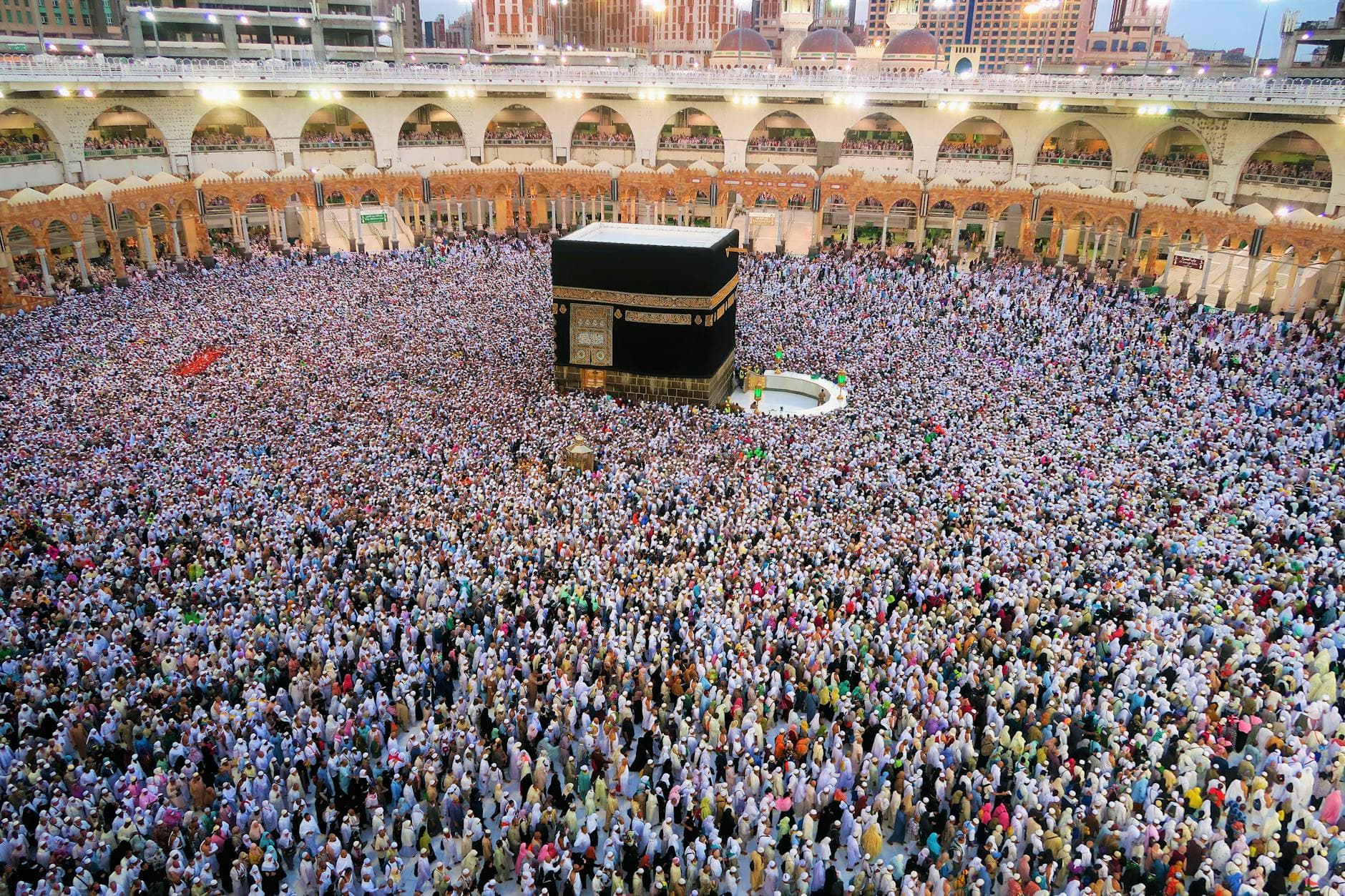
Islamic Unity: Bridging Gaps and Strengthening Brotherhood in Challenging Times
In an increasingly interconnected yet often fractured world, the Muslim Ummah faces a myriad of challenges. From geopolitical conflicts leading to immense suffering for our brothers and sisters across the globe, to the pervasive influence of secularism and materialism, the need for collective strength and solidarity has never been more urgent. Yet, heartbreakingly, amidst these external pressures, we sometimes find ourselves grappling with internal discord, with discussions around madhab differences occasionally overshadowing the profound unity that Islam inherently calls for.
Indeed, a sentiment often echoed in Muslim communities, reflecting the trending discussions, is the frustration that while severe injustices are perpetrated against Muslims globally, precious energy is sometimes expended on internal arguments rather than presenting a united front. This article aims to explore the deep-rooted Islamic principle of unity, provide guidance on respectfully navigating differences, and inspire a renewed commitment to brotherhood and solidarity as commanded by Allah (SWT) and His Messenger (PBUH).
The Divine Call for Unity: A Core Islamic Principle
At the very heart of Islam lies the concept of Tawhid – the Oneness of Allah. This fundamental belief extends beyond theological creed to manifest in the unity of purpose and action among His creation, especially among believers. The Quran repeatedly emphasizes the importance of unity and warns against division, recognizing it as a source of weakness and discord.
Allah (SWT) states in the Quran:
"And hold firmly to the rope of Allah all together and do not become divided. And remember the favor of Allah upon you – when you were enemies and He brought your hearts together, so you became by His favor brothers. And you were on the edge of a pit of the Fire, and He saved you from it. Thus does Allah make clear to you His verses that you may be guided." — (Quran 3:103)
This powerful verse reminds us that unity is not merely a social preference, but a divine command and a immense blessing. It transformed a society riddled with tribal feuds and animosities into a cohesive brotherhood, laying the foundation for a civilization guided by shared values and a singular purpose: to worship Allah and establish justice on Earth.
Further emphasizing this, Allah (SWT) also warns:
"And do not be like those who became divided and differed after the clear proofs had come to them. And for them is a great punishment." — (Quran 3:105)
These verses serve as a stark reminder of the spiritual and worldly perils of disunity. When we are divided, our strength wanes, our voice weakens, and our collective ability to uphold justice and righteousness diminishes.
The Prophetic Example: A Model of Brotherhood
The life of Prophet Muhammad (PBUH) is a living testament to the power of unity and brotherhood. Upon his migration to Madinah, one of his first and most significant acts was to establish brotherhood (Mu'akhat) between the Muhajirun (emigrants from Makkah) and the Ansar (helpers from Madinah). This was not merely a symbolic gesture; it was a profound socio-economic and spiritual bond that transcended kinship and tribal loyalties. The Ansar shared their homes, wealth, and livelihoods with their Muhajirun brothers, demonstrating an unparalleled level of selflessness and solidarity.
Consider the Hadith:
Narrated Abu Musa: "The Prophet (peace be upon him) said, 'A believer to another believer is like a building whose different parts support each other.' The Prophet then clasped his hands with the fingers interlaced." — (Sahih Bukhari, Hadith 2446; Sahih Muslim, Hadith 2585a)
This beautiful analogy perfectly illustrates the interconnectedness and mutual support that should characterize the Muslim community. Just as a building crumbles without the interdependent strength of its components, so too does the Ummah weaken without its members supporting one another.
Another Hadith highlights the depth of this brotherhood:
Narrated An-Nu'man ibn Bashir: "The Messenger of Allah (peace be upon him) said, 'The similitude of believers in regard to their mutual love, affection, and sympathy is that of one body; when any limb of it suffers, the whole body responds to it with sleeplessness and fever.'" — (Sahih Muslim, Hadith 2586)
This prophetic teaching mandates empathy, shared pain, and collective action. When Muslims suffer anywhere in the world, it should resonate deeply within every believer, prompting a unified response, whether through prayer, advocacy, or practical aid.
Understanding Madhab Differences: A Mercy, Not a Malady
One of the most frequently cited sources of internal discord relates to differences in jurisprudential schools of thought, or madhabs (Hanafi, Maliki, Shafi'i, Hanbali, etc.). It's crucial to understand that these schools developed as systematic methodologies for deriving rulings from the Quran and Sunnah, based on the profound scholarship and meticulous research of early Islamic jurists. They represent a natural and healthy intellectual diversity within the framework of Islam.
The existence of different madhabs is often seen by scholars as a mercy (rahmah) for the Ummah, offering flexibility and various interpretations that cater to different contexts, cultures, and levels of understanding. The early scholars themselves, such as Imam Abu Hanifa, Imam Malik, Imam Shafi'i, and Imam Ahmad ibn Hanbal, held profound respect for one another, even when they differed on specific rulings. They understood that their differences stemmed from sincere efforts to understand and apply the divine texts, not from a desire to create division.
For example, the variation in prayer timings based on different calculations, or nuances in the methods of wudu (ablution) or salah (prayer), are all valid interpretations rooted in diverse understandings of the same foundational texts. A Muslim following one madhab should respect and acknowledge the validity of another Muslim following a different, authentically recognized madhab.
When Differences Turn into Division
The problem arises not from the existence of madhabs themselves, but from sectarian fanaticism – when adherents to one school begin to condemn, vilify, or ostracize those who follow another. This narrow-mindedness contradicts the expansive spirit of Islam and goes against the very principle of brotherhood. It diverts attention from the core tenets of faith and action, leading to unnecessary disputes and weakening the fabric of the community.
The Quran and Sunnah prioritize unity on fundamental matters of faith (Usul) over rigid adherence to specific interpretations on secondary issues (Furu'). The Shahada (declaration of faith), the five daily prayers, fasting in Ramadan, paying Zakat, and performing Hajj are universal pillars that bind all Muslims, regardless of their madhab.
The Call to Action: Prioritizing the Ummah's Well-being
The suffering of Muslims in various parts of the world – whether due to war, oppression, poverty, or natural disasters – serves as a poignant reminder of our collective responsibility. When we witness the struggles of our brothers and sisters, focusing on internal disputes over minor jurisprudential issues becomes a grave misplacement of priorities.
The trending discussions on Muslim suffering and internal arguments reflect a deep frustration that is understandable. Our energy, intellect, and resources should be channeled towards addressing these larger injustices and advocating for the vulnerable, rather than allowing trivial disagreements to fester into debilitating divisions. This is not to say that scholarly discussion and pursuit of knowledge are unimportant, but rather that adab (Islamic etiquette) and perspective must prevail.
Practical Steps Towards Fostering Unity
How can we, as individuals and communities, actively contribute to strengthening Islamic unity and bridging gaps?
1. Focus on Commonalities
Remind ourselves and others of the foundational beliefs and practices that unite all Muslims. The Quran, the Sunnah of Prophet Muhammad (PBUH), the oneness of Allah (SWT), and the shared aspiration for His pleasure are far greater than any differences in legal interpretation.
2. Cultivate Mutual Respect and Understanding
Educate ourselves about different madhabs and scholarly methodologies. Understand that sincere differences of opinion have existed since the time of the Sahaba and are part of Islam's intellectual richness. Avoid quick judgments or condemnation of those who follow a different path, as long as it adheres to authentic Islamic sources.
3. Prioritize Collective Action
Engage in initiatives that bring Muslims together for the greater good: community projects, charity work, advocacy for human rights, and educational programs. When we work side-by-side for a common, noble cause, our differences naturally recede into the background.
4. Promote Adab al-Ikhtilaf (Etiquette of Disagreement)
Learn to discuss differences respectfully, without resorting to insults, mockery, or excommunication. Our disagreements should be a means of seeking truth and understanding, not for personal attacks or division. Seek knowledge from qualified scholars who embody this adab.
5. Be Mindful of Social Media
Online platforms can amplify divisions. Be cautious about spreading unverified information, engaging in debates fueled by emotion rather than knowledge, or participating in discussions that lead to sectarian animosity. Instead, use these platforms to promote positive messages of unity and brotherhood.
The Promise of Unity and the Peril of Disunity
Allah (SWT) promises strength and success to a united Ummah:
"And obey Allah and His Messenger, and do not dispute and [thus] lose courage and [then] your strength would depart; and be patient. Indeed, Allah is with the patient." — (Quran 8:46)
This verse explicitly links obedience, avoiding dispute, and patience with the preservation of strength and courage. Disunity, conversely, leads to weakness and failure.
Our unity is not just a strength against external adversaries, but an inner spiritual and social cohesion that fosters peace, justice, and compassion within our communities. It is a reflection of our submission to Allah's will and our adherence to the path of His beloved Prophet (PBUH).
Conclusion
The challenges facing the Muslim Ummah are immense, demanding our collective wisdom, compassion, and strength. While intellectual diversity and scholarly debate are healthy aspects of Islam, these must never devolve into destructive sectarianism. Our focus must remain on the vast common ground that unites us, the fundamental principles of our faith, and the pressing needs of our brothers and sisters around the world.
Let us remember the words of Allah and His Messenger (PBUH) and strive to embody the true spirit of Islamic brotherhood – a brotherhood characterized by mutual love, support, and a shared commitment to justice and truth. Only then can we truly fulfill our role as witnesses for humanity and present Islam's beautiful message of peace and unity to the world.
May Allah (SWT) unite our hearts and strengthen our resolve to work together for His sake, and for the betterment of humanity. Ameen.